
Diaper Blowout Prevention — Why Blowouts Happen and How to Stop Them for Good
Few parenting moments are as universally dreaded as the diaper blowout — that explosive, clothes-ruining, car-seat-destroying mess that always seems to happen at the worst possible time. But here's the good news: most blowouts are completely preventable once you understand why they happen and what to do about it.
Why Diaper Blowouts Happen
Understanding the mechanics of a blowout is the first step to preventing them. A blowout occurs when the contents of a dirty nappy escape through gaps in the seal — typically up the back, around the legs, or occasionally out the front. It's not a design flaw in all cases; several factors contribute.
Wrong Diaper Size
This is the number one cause of blowouts, and it goes both ways. A diaper that's too small doesn't have enough absorbent material to contain the volume, and the waistband and leg openings are stretched too tight, creating gaps. A diaper that's too big has loose leg cuffs that don't seal against the skin, leaving escape routes for liquid and solid waste.
The key metric isn't your baby's age — it's their weight. Check the weight range on the diaper packaging and size up when your baby is approaching the upper end of their current size range, not after they've already exceeded it.
Poor Fit Around the Legs
Even in the correct size, a diaper can blowout if the leg cuffs aren't positioned properly. The ruffled leg cuffs (sometimes called "leak guards" or "poo pockets") need to be pulled out and positioned around the crease of your baby's thigh — not tucked inside the diaper. This creates the seal that contains everything.
Inadequate Back Coverage
Back blowouts — the most common and most devastating type — happen when the back waistband doesn't sit high enough or tight enough. Diapers with elastic back waistbands and a higher back rise significantly reduce this risk. Not all diapers are created equal in this regard.
Absorbency Overload
Even a perfectly fitting diaper can blow out if it's been on too long and the absorbent core is saturated. Wet diapers lose their structural integrity, and the added volume of a bowel movement on top of an already-full nappy is a recipe for disaster.
Blowout Prevention Strategies That Actually Work
1. Size Up at the Right Time
Don't wait for obvious signs like red marks on the skin or frequent leaks. Size up when your baby reaches the midpoint of the weight range for their current size. This gives the diaper more coverage and containment capacity while still fitting snugly enough to seal properly.
2. Master the Leg Cuff Check
Every time you put on a fresh nappy, run your finger around both leg openings to make sure the cuffs are pulled out and sitting in the thigh crease. This takes two seconds and prevents the vast majority of leg-area blowouts. Make it a habit — your future self will thank you.
3. Position the Back Waistband Higher
When fastening the diaper, pull the back up slightly higher than the front. The back should sit at or just above the belly button level. This extra coverage is crucial because gravity and sitting position direct most bowel movements toward the back.
4. Change More Frequently
A fresh diaper contains better than a half-full one. If your baby has predictable bowel movement times (many do), try to have a fresh nappy on them beforehand. And don't let a wet diaper sit too long — the absorbed liquid reduces capacity for anything else.
5. Choose the Right Diaper Brand
Not all diapers are engineered equally for blowout resistance. Key features to look for include a stretchy elastic back waistband, deep leg cuffs with double barriers, a high-rise back design, and a fast-absorbing core that locks liquid away quickly.

Diaper Blowout Resistance Comparison
| Feature | CuddleKin | Pampers | Huggies | Store Brand |
|---|---|---|---|---|
| Elastic Back Waistband | ✅ Full stretch | Partial | ✅ | ❌ |
| Double Leg Cuffs | ✅ | ✅ | ✅ | Single |
| High-Rise Back | ✅ | Moderate | Moderate | Low |
| Non-Toxic | ✅ TCF | ❌ | ❌ | ❌ |
| 12hr+ Absorbency | ✅ | ✅ (some) | ✅ (some) | ❌ |
Blowout First Aid: What to Do When It Happens
Even with perfect prevention, the occasional blowout is inevitable. When it happens, stay calm. Pull the onesie up and over the head using the envelope fold at the shoulders (those shoulder flaps exist specifically for this purpose — to pull the garment down instead of over the face). Use wipes for initial cleanup, then head straight for the bath. For clothing, rinse immediately in cold water before washing — hot water sets protein stains.
When to See a Doctor
Frequent, watery blowouts that happen multiple times a day could indicate a food sensitivity, allergy, or stomach bug rather than a diaper problem. If your baby's stools are consistently explosive and you've already optimised diaper fit and sizing, it's worth mentioning to your paediatrician.
Try CuddleKin's Blowout-Resistant Design
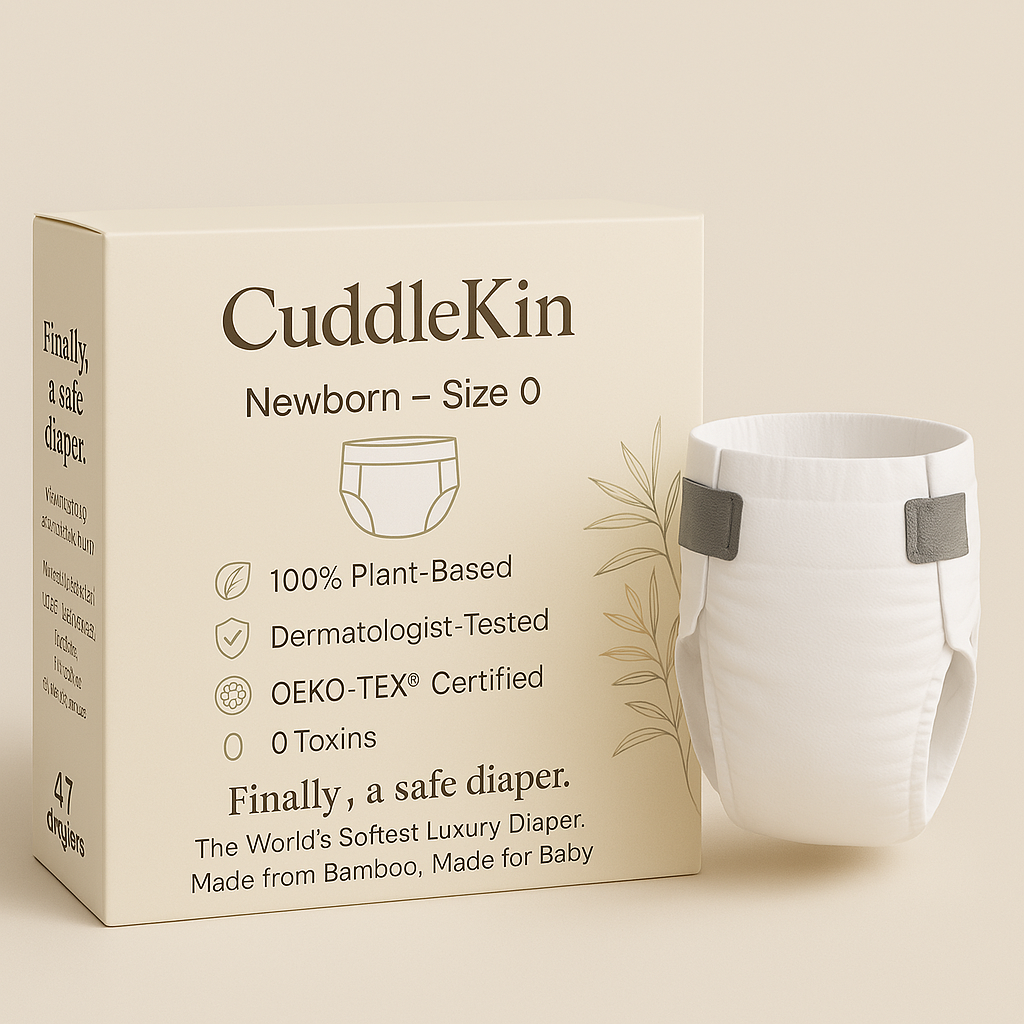
CuddleKin diapers are specifically engineered with blowout prevention in mind. Our full elastic back waistband, double leg barriers, high-rise back design, and fast-absorbing TCF core work together to contain even the most impressive baby outputs — all while keeping harmful chemicals away from your baby's skin.
Frequently Asked Questions
What causes diaper blowouts up the back?
Back blowouts are usually caused by a diaper that's too small, positioned too low, or lacks an elastic back waistband. Gravity and sitting position direct bowel movements toward the back, so this area needs the most secure seal.
Does sizing up prevent blowouts?
Often yes — moving to the next size gives more coverage and containment capacity. Size up when your baby reaches the midpoint of their current size's weight range, not after they've exceeded it.
Are certain diaper brands better at preventing blowouts?
Yes. Look for brands with full elastic back waistbands, double leg cuffs, and high-rise backs. CuddleKin's design specifically addresses these blowout-prone areas while maintaining non-toxic, chemical-free materials.
How often should I change diapers to prevent blowouts?
Every 2–3 hours for wet diapers, and immediately after a bowel movement. A fresh diaper has maximum containment capacity, reducing blowout risk significantly.